


What Is an Ephemeris? A Clear Explanation of How Astrologers Track the Planets
If you have spent any time reading horoscopes or studying astrology, you have probably come across the word ephemeris. Although it may sound technical, an ephemeris is simply a table showing where the Sun, Moon and planets are located in the zodiac at specific dates and times.
For astrologers, an ephemeris is one of the most important reference tools. It allows them to see when planets change signs, begin or end retrograde motion, form conjunctions and other aspects, or reach important events such as eclipses and lunations. Without an ephemeris, modern astrology would be extremely difficult to practise accurately.
What does the word ephemeris mean?
The word ephemeris comes from the Greek word ephemeros, meaning daily or for a day.
Traditionally, an ephemeris was published as a book containing the daily positions of the Sun, Moon and planets for an entire year. Today, many ephemerides are available online and can be searched instantly for any date.
Although the format has changed, the purpose remains exactly the same: to provide an accurate record of planetary positions.
What information does an ephemeris contain?
A typical astrological ephemeris includes:
- the zodiac position of the Sun
- the zodiac position of the Moon
- the zodiac position of each planet
- planetary retrograde and direct stations
- planetary ingresses into new zodiac signs
- New Moons and Full Moons
- solar and lunar eclipses
- significant astronomical events used in astrology
Some professional ephemerides also include planetary speed, declination, lunar nodes, Chiron, asteroids and other specialised information.
Why do astrologers use an ephemeris?
Astrology depends upon knowing the precise positions of the planets.
Every horoscope, birth chart and forecast begins with accurate planetary data. Before any interpretation takes place, an astrologer must first establish where the planets are located in the zodiac.
An ephemeris provides that information.
For example, an astrologer may wish to know:
- When does Mercury enter Virgo?
- When does Saturn turn retrograde?
- What sign is Jupiter in today?
- When is the next Full Moon?
- Which planets are currently retrograde?
All of these questions can be answered directly from an astrological ephemeris.
How is an ephemeris used to create horoscopes?
Daily, weekly, monthly and yearly horoscopes are all based on changing planetary positions.
An astrologer studies the movements shown in the ephemeris and interprets how those movements may symbolically influence each zodiac sign or an individual's birth chart.
For example, if Venus enters Libra, the astrologer may expect greater emphasis on relationships, cooperation and harmony. If Mars begins retrograde, attention may shift towards reviewing plans and reconsidering how energy is being used.
The ephemeris provides the factual planetary positions. The horoscope is the astrologer's interpretation of those positions.
Is an ephemeris the same as a birth chart?
No.
A birth chart records the positions of the planets at one specific moment, based on a person's date, time and place of birth.
An ephemeris is a continuous reference that shows where the planets are on every day throughout the year.
Astrologers use an ephemeris to calculate birth charts, analyse current planetary movements and compare today's sky with the positions recorded in a natal chart.
Why do ephemerides use Universal Time (UTC)?
Most modern ephemerides are calculated using Universal Time (UTC).
Using a single worldwide time standard ensures that every astrologer is working from exactly the same astronomical data. Readers can then convert those times into their own local time zone if required.
This avoids confusion between countries and ensures planetary positions remain consistent regardless of where the ephemeris is being used.
Are ephemerides based on astronomy?
Yes.
An astrological ephemeris is built from astronomical calculations that determine the precise positions of celestial bodies. These positions are calculated using well-established astronomical methods.
Astrology and astronomy differ in how they use that information. Astronomy measures and predicts planetary positions as physical objects moving through space. Astrology uses those same positions as the basis for symbolic interpretation.
Can anyone read an ephemeris?
Yes.
Although a full professional ephemeris may appear complicated at first, the basic information is straightforward to understand.
Once you know the zodiac signs, planetary symbols and dates, you can quickly identify:
- which sign each planet occupies
- when planets change signs
- when retrogrades begin and end
- the dates of New and Full Moons
- important eclipses
- other major astrological events
Learning to read an ephemeris is one of the most valuable skills for anyone wishing to understand astrology more deeply.
Why is an ephemeris important?
Every branch of astrology depends on accurate planetary positions.
Whether creating a daily horoscope, interpreting a birth chart, studying planetary transits or examining historical events, astrologers begin with the same foundation: an accurate ephemeris.
It provides the factual astronomical framework upon which astrological interpretation is built.
In summary
An ephemeris is a chronological record of the positions of the Sun, Moon and planets. It allows astrologers to identify planetary ingresses, retrogrades, lunations, eclipses and many other important events that form the basis of horoscope interpretation.
Although the interpretations belong to astrology, the planetary positions themselves are calculated using precise astronomical data. For this reason, the ephemeris remains one of the most essential reference tools in both traditional and modern astrology.
Sources
- Claudius Ptolemy, Tetrabiblos
- Raphael's Astronomical Ephemeris
- The American Ephemeris and Nautical Almanac
- Swiss Ephemeris astronomical calculations
- Zodiac Astrology Horoscopes Ephemeris datasets for 2026–2028
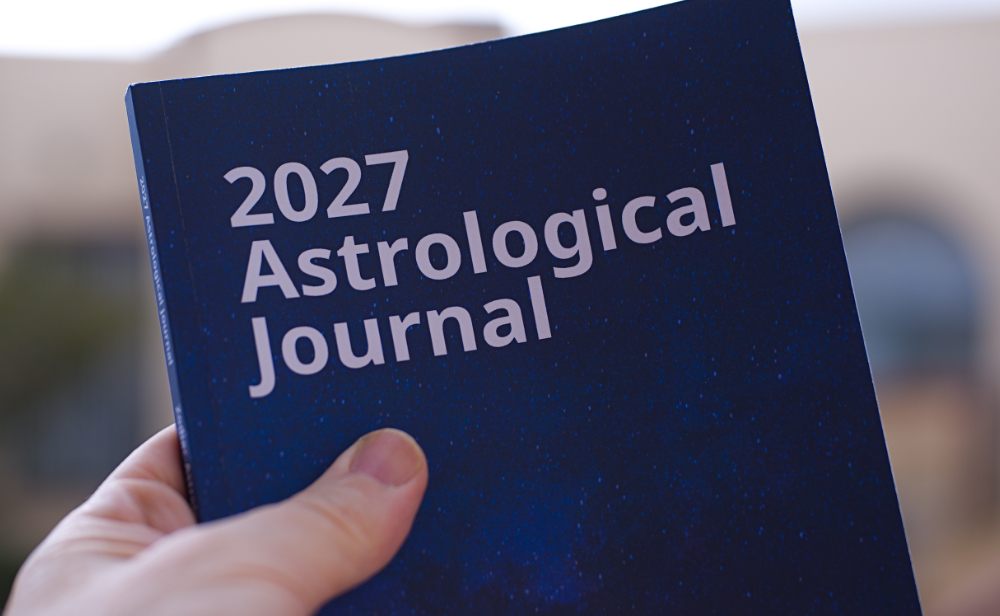
- 2027 Astrological Journal Book
 Aries
Aries Taurus
 Gemini
 Cancer
 Leo
Leo Virgo
Virgo Libra
Libra Scorpio
 Sagittarius
 Capricorn
 Aquarius
 Pisces