


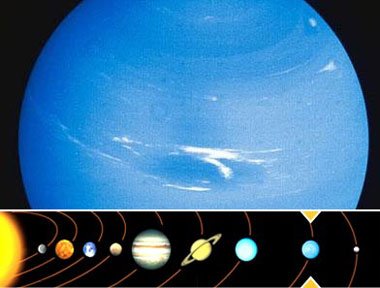
Every planet is constantly moving through the zodiac.
Your birth chart is a snapshot of where the planets were at the exact moment you were born. A transit is the name astrologers give to the current movement of the planets as they continue their journey through the sky after your birth.
By comparing today's planetary positions with your birth chart, astrologers identify periods that emphasise particular themes, opportunities or challenges. This is one of the most widely used techniques in Western astrology and forms the basis of many daily, weekly and yearly forecasts.
Your Birth Chart Never Changes
Your birth chart remains the same throughout your life.
It records the positions of the Sun, Moon and planets at the moment you were born. Those positions become your permanent reference point.
Although your birth chart never changes, the planets continue moving every day. Mercury completes its journey around the zodiac much more quickly than Saturn, while the Moon changes sign every two or three days. As these moving planets pass across the positions shown in your birth chart, they create transits.
Anyone unfamiliar with this starting point can first read our simple explanation of how an astrological birth chart works.
A Transit Is the Relationship Between Then and Now
A simple way to understand a transit is as a comparison between two moments in time.
The first moment is your birth. The second is today.
Astrologers compare the current position of each planet with the positions recorded in your birth chart. They then examine how those planets interact through aspects, house placements and changing planetary cycles.
It is these changing relationships between the current sky and your birth chart that are called transits.
The planets describe the type of influence involved. The zodiac signs show how that influence is expressed. The houses show which area of life is affected. Our guide to how planets, signs and houses work together in a birth chart explains how these different parts combine.
Why Are Transits Important?
Astrologers use transits to understand timing.
A birth chart describes the underlying pattern of a person's life, while transits show when particular parts of that pattern become more active.
For example, a transit may highlight relationships, career, family responsibilities, travel, study or personal development. The exact area involved depends on the planet, the aspect it forms and the house it moves through.
For this reason, transits are widely used when preparing personal horoscope consultations and forecasting future trends.
This also explains the difference between a horoscope and a birth chart. The birth chart remains fixed, while a horoscope interprets the current and approaching planetary movements affecting that chart.
Transiting Planets and Natal Planets
The planets shown in a birth chart are often called natal planets. The planets moving through the zodiac today are called transiting planets.
When an astrologer says that transiting Saturn is affecting your natal Sun, they are comparing Saturn's present position with the position of the Sun at your birth.
The nature of the transit depends on the planets involved. Each planet represents a different part of life and experience. Mercury concerns thought and communication, Venus concerns relationships and values, Mars concerns action and drive, while Saturn concerns structure, limits and responsibility.
Our article explaining what the planets mean in astrology provides a clear breakdown of these different planetary roles.
Transits Form Aspects
A transit becomes especially important when a moving planet forms an aspect to a planet or point in the birth chart.
An aspect is a measured angle between two planetary positions. The major aspects include the conjunction, opposition, square, trine and sextile.
A conjunction brings two planetary influences together. An opposition creates a direct pull between them. A square produces pressure that requires action. A trine supports an easier flow, while a sextile opens an opportunity that still needs to be recognised and used.
The aspect shows how the transiting planet interacts with the birth chart. Our guide to astrological aspects and planetary angles explains these relationships in greater detail.
Fast Moving and Slow Moving Planets
Not every transit lasts for the same amount of time.
The Moon moves quickly through the zodiac, so its transits often reflect changing moods, immediate reactions and short influences lasting a few hours or days.
Mercury, Venus and Mars usually describe developments that unfold over days or weeks. Their transits often relate to communication, relationships, decisions, motivation and everyday activity.
Jupiter, Saturn, Uranus, Neptune and Pluto move much more slowly. Their transits can remain active for months or even years, marking longer periods of growth, responsibility, disruption or major personal change.
Because the outer planets move slowly, astrologers pay close attention when they form an exact aspect to an important part of a birth chart.
What Happens When a Planet Changes Sign?
As a planet moves through the zodiac, it eventually leaves one sign and enters another. This change is called a planetary ingress.
An ingress changes the way a planet expresses its influence. Mars in Gemini acts differently from Mars in Cancer. Venus in Virgo approaches relationships differently from Venus in Libra.
An ingress affects the general astrological atmosphere, but it also creates personal transits as the planet moves into a new part of an individual birth chart.
Retrograde Transits
Sometimes a planet appears to move backwards through the zodiac. This is known as retrograde motion.
During a retrograde period, a planet may pass across the same degree of the zodiac more than once. This can cause a transit to become active, move away and then return before finally completing.
This repeated movement is one reason some transits last much longer than expected. A subject may first appear during the initial contact, require review during the retrograde contact and reach a conclusion when the planet moves forward again.
Mercury retrograde is the best known example, but every planet except the Sun and Moon has regular retrograde periods.
Transits Are Not Single Event Predictions
One of the biggest misunderstandings about astrology is that a transit predicts one unavoidable event.
Traditionally, astrologers have viewed transits as periods when particular conditions become active. The planet identifies the subject. The aspect describes the type of interaction. The house identifies the area of life involved.
A Saturn transit may bring increased responsibility, but that responsibility could appear through work, family, finances or a personal commitment. A Jupiter transit may bring growth, but that growth could involve education, travel, confidence or a new opportunity.
The transit describes the active theme. The birth chart shows where and how that theme is most likely to appear.
This is why astrology does not reduce every planetary movement to one fixed result. Our article examining what astrology can and cannot predict about the future explains this distinction more fully.
Everyday Examples of Transits
Many people first encounter transits through widely discussed planetary movements.
A Mercury transit may bring an important conversation, decision or change of plan.
A Venus transit may draw attention to a relationship, financial matter or personal value.
A Mars transit may increase drive, impatience or the need to take direct action.
A Jupiter transit often expands whatever part of the chart it touches, bringing development, confidence or a wider range of possibilities.
A Saturn transit brings structure, tests and greater responsibility. It often shows where something must become stronger, more realistic or more disciplined.
These are the basic planetary themes. The sign, house and aspect determine how each transit takes shape.
How Do Astrologers Calculate Transits?
Astrologers calculate transits using an ephemeris.
An ephemeris lists the exact positions of the Sun, Moon and planets for each date. It shows the zodiac sign and degree occupied by every planet, allowing astrologers to compare the current sky with a birth chart.
These positions are based on astronomical calculations. Our explanation of how astrologers know where the planets are looks at the calculations behind the planetary positions.
An astrologer can use an ephemeris to see when a planet enters a sign, turns retrograde, changes direction or reaches an exact aspect. This makes it possible to identify when a transit begins, when it is strongest and when it moves out of range.
For a closer look at this essential forecasting tool, read why astrologers need an ephemeris.
When Is a Transit Strongest?
A transit usually builds gradually.
It begins as the moving planet approaches the natal position. It becomes strongest when the aspect is exact. Its influence then begins to fade as the planet moves away.
Astrologers describe the permitted distance from an exact aspect as an orb. A transit within a close orb is normally treated as more immediate than one that is still several degrees away.
Slow moving planets may remain within range for a long period. Retrograde motion can also bring the same transit back several times, extending its influence across many months.
Why Do Transits Matter?
Transits help explain why different periods of life have a different emphasis.
There are times when life becomes busy and full of opportunity. Other periods demand patience, reflection or adjustment. Some transits bring movement, while others slow things down and force unfinished matters to be addressed.
Astrologers study transits because they provide a structured way of examining these changing cycles.
Rather than replacing the birth chart, transits bring it into the present. They show how today's sky interacts with the unique planetary pattern that existed when you were born.
Final Thoughts
A transit in astrology is the current position of a planet compared with the planetary positions in your birth chart. By studying these changing relationships, astrologers identify the themes, opportunities and pressures becoming active at different stages of life.
Understanding transits is one of the keys to understanding astrological forecasting. Your birth chart never changes, but the planets are always moving, creating a continuous relationship between the chart you were born with and the sky above you today.
A transit compares today's planetary positions with your birth chart to identify changing themes and cycles throughout life. It is one of the most important forecasting techniques used in Western astrology.
 Aries
Aries Taurus
 Gemini
 Cancer
 Leo
Leo Virgo
Virgo Libra
Libra Scorpio
 Sagittarius
 Capricorn
 Aquarius
 Pisces