


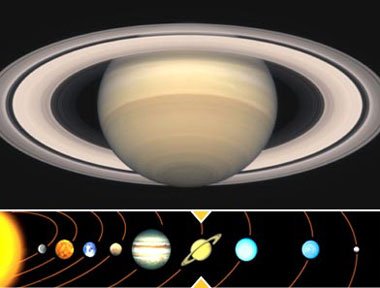
The ruling planet of Aquarius is traditionally Saturn, with Uranus recognised in modern astrology as a secondary influence. In astrology, a ruling planet represents the central force that shapes how a zodiac sign approaches life and expresses its natural instincts. Saturn governs structure, responsibility, and social order, while Uranus symbolises disruption, innovation, and sudden change. Together these influences explain why Aquarius is associated with both disciplined thinking and a desire to challenge existing systems.
What Saturn Represents in Astrology
Saturn represents structure and responsibility. In classical astrology it symbolises the forces that define limits, establish rules, and create stability over time. Saturn governs authority, organisation, and the ability to build systems that endure.
Unlike Jupiter, which expands outward, Saturn concentrates energy and demands careful planning. It reflects the principle that progress requires discipline and patience. Individuals influenced strongly by Saturn often show determination, reliability, and a respect for experience.
Saturn also relates to collective structure. It represents institutions, laws, and social frameworks that shape how societies function. These themes connect closely with the sign of Aquarius, which often focuses on broader social questions rather than purely personal concerns.
Why Saturn Rules Aquarius
The connection between Saturn and Aquarius comes from the traditional rulership structure of the zodiac. In the classical model known as the Thema Mundi, the Sun rules Leo and the Moon rules Cancer at the centre of the zodiac. The remaining planets are assigned outward according to their distance from the Sun in the ancient cosmological structure.
Saturn occupies the outermost level of the visible planetary system. Because of this position it rules Capricorn and Aquarius in traditional astrology.
Although both signs share Saturn as their ruler, they express the planet differently. Capricorn channels Saturn into personal ambition and long term achievement. Aquarius expresses Saturn through social structure, collective responsibility, and the organisation of communities.
Aquarius therefore represents Saturn’s influence on systems that affect groups rather than individuals alone.
The Modern Influence of Uranus
Modern astrology associates Uranus with Aquarius because of the planet’s symbolism and revolutionary character. Uranus represents sudden change, innovation, and the willingness to challenge established assumptions.
Discovered in 1781 during a period of political and scientific revolution, Uranus quickly became linked with ideas of freedom and intellectual independence. These themes align closely with Aquarius, which often questions outdated systems and encourages new approaches to social organisation.
Many astrologers therefore describe Saturn as the traditional ruler of Aquarius and Uranus as a modern secondary influence. Saturn explains Aquarius’ interest in structure and collective responsibility. Uranus explains the sign’s ability to challenge systems and introduce new perspectives.
How Saturn and Uranus Shape Aquarius Behaviour
Because Aquarius is influenced by both Saturn and Uranus, the sign often combines disciplined thinking with independent ideas. Aquarius tends to analyse existing structures carefully before proposing improvements or alternatives.
Aquarius is strongly oriented toward the collective. The sign often shows interest in social systems, technological development, or movements that influence large groups of people. Rather than focusing only on personal gain, Aquarius often considers how decisions affect communities or future generations.
Uranus contributes originality and intellectual independence. Aquarius frequently questions assumptions that others accept without discussion. This quality can lead to innovative solutions or new ways of thinking about familiar problems.
At the same time, Saturn’s influence encourages Aquarius to maintain awareness of practical reality. When these influences work together effectively, Aquarius combines creative thinking with an understanding of how systems must function in the real world.
When Aquarius Energy Is Activated
The influence of Aquarius becomes more noticeable when Saturn or Uranus form strong aspects with Aquarius placements in a birth chart or when the Sun moves through Aquarius during its seasonal cycle.
When Saturn transits Aquarius, attention often turns toward social responsibility and long term planning for communities or organisations. Structures may be examined and strengthened to support future stability.
When Uranus interacts strongly with Aquarius placements, new ideas and unexpected developments often appear. These periods can encourage innovation, technological change, or shifts in collective thinking.
Because Uranus moves slowly through the zodiac, its influence often reflects generational trends rather than short term events.
Why the Ruling Planet Matters in a Birth Chart
The ruling planet of a sign becomes especially important when that sign appears on the Ascendant, or rising sign, of a birth chart. When Aquarius rises, Saturn becomes the traditional chart ruler, while Uranus can offer additional insight into themes of innovation and independence.
The placement of Saturn reveals how the individual approaches responsibility and long term planning. Uranus may indicate areas of life where independence, experimentation, or sudden change becomes important.
Astrologers therefore examine both planets when Aquarius is prominent in a chart. Their positions help explain how Aquarius energy operates in practical life.
The Core Influence of Aquarius’ Ruling Planets
Understanding the ruling planets of Aquarius explains why this sign is often associated with intellectual independence and social awareness. Saturn provides the structural understanding that helps Aquarius analyse systems. Uranus introduces the willingness to question and improve those systems.
When these influences are balanced, Aquarius becomes a powerful force for thoughtful progress. The sign reminds the zodiac that meaningful change often comes from combining disciplined thinking with the courage to imagine something different.
 Aries
Aries Taurus
 Gemini
 Cancer
 Leo
Leo Virgo
Virgo Libra
Libra Scorpio
 Sagittarius
 Capricorn
 Aquarius
 Pisces